
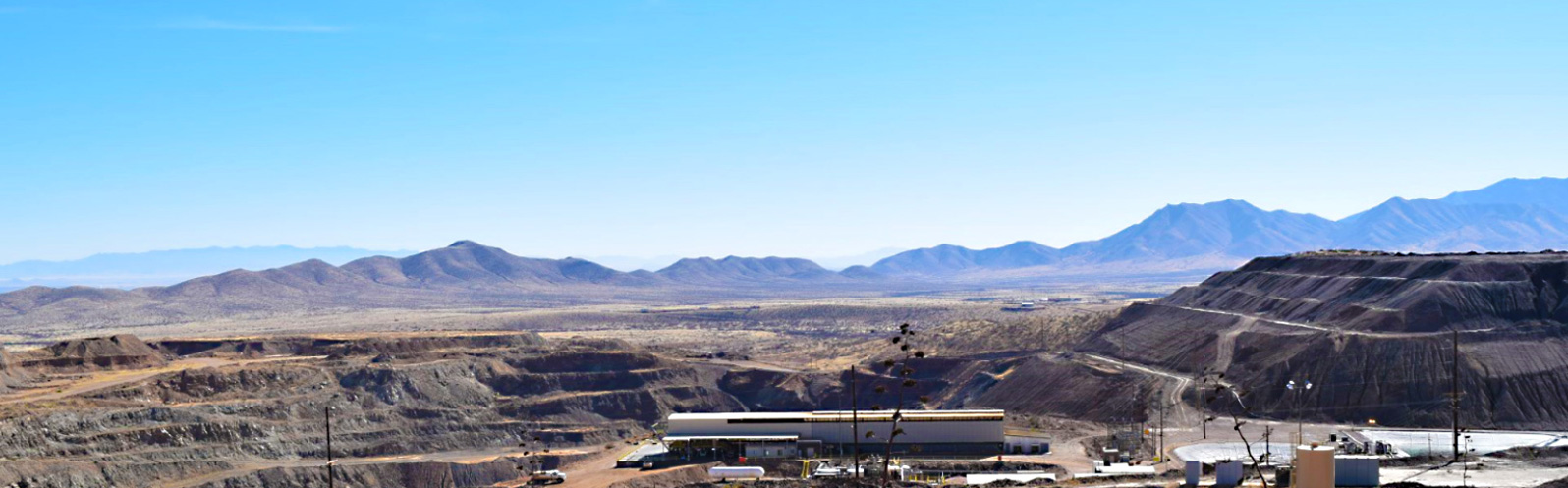
Gunnison Copper Project
Technical Report
Mineral resources that are not mineral reserves do not have demonstrated economic viability.
2012 Exploration Results The 2012 exploration program included diamond drilling for metallurgical testing and for structural, geological and resource definition. Excelsior completed a total of 10,502 feet (3,150 metres) of diamond drilling with intersections including 0.79% copper over 599 feet in drill hole NSD-24 (see news release dated July 31, 2012). Detailed drill results and the drill hole location map can be viewed below. Metallurgical testing included six leach box tests on whole HQ core (~63.5mm diameter), representing a range of rock types and varying from low permeability (low fracture intensity) to high permeability (high fracture intensity). The results averaged approximately 51% total copper extraction, which is in line with the Preliminary Economic Assessment. See news release dated November 15, 2012 for full details. 2011 Exploration Results
Exploration History There has been no direct mining history on the Gunnison Property; however, there has been considerable mining in the surrounding area that began in the 1880’s. The North Star and South Star deposits were discovered in the 1960’s and since their discovery several companies have done extensive assaying, magnetic and IP surveys, metallurgical testing, hydrological studying, and leach testing. In 2006, AzTech became involved in the Gunnison Property and since then, significant testing and analyzing has been completed suggesting that there are strong segments of the Gunnison Property worthy of further exploration and mining. 1960: Deposits were initially discovered by Cyprus-Johnson Mining Company and later mined as an open pit operation with acid leach and electro-winning until 1985. Geology
Metallurgy Submerged leach tests A total of 13 submerged leach tests were commenced in mid-October 2012. By early February, 5 of the 13 tests had been completed and the results are presented in Table 1 below. The remaining 7 tests are still under active leaching and are expected to conclude within the next 30 to 60 days (March-April 2013). The 5 tests completed are from the Lower Abrigo rock formation. The remaining 7 tests are from the Martin formation and Upper/Middle Abrigo formations. Table 1. Results from submerged leach tests on the Lower Abrigo formation
The submerged leach tests employ a different test protocol then the previous “Box tests”, primarily because using the “Box test” protocol does not allow for confirmatory or duplicate tests to verify test results. This new test protocol is similar to the standard column leach test with modifications to more closely reflect the conditions during in-situ leaching. Figure 1 below shows the recovery time curve for the five submerged leach tests. Two points are evident from the recovery versus time plot. a) Higher acid concentrations and higher flow rates (columns 9, 10 and 11) give higher recoveries for any given time, with the highest acid concentration (column 9) giving the highest recovery. Note: Column 9 was still leaching at the time the column was shut down. b) Longer leach times (e.g. column 13) give higher recoveries despite low acid concentration and flow rate. The submerged leach tests are being conducted by independent laboratory SGS Metcon of Tucson, Arizona under the supervision of Dr. Ronald J. Roman of Leach, Inc., Tucson, Arizona. Dr. Roman has reviewed and approved the technical information disclosed above and is an independent consultant who is a Qualified Person as defined by NI 43-101. Acid consumption tests In the North Star deposit most of the copper oxide mineralization occurs as thin coatings on natural fracture surfaces or as thin stringers which offer the least resistance to solution flow and are the source of the permeability within the deposit. During in-situ mining the leach solution will preferentially move through the rock along this mineralized fracture network. The difficulty arises in collecting and preparing samples for metallurgical testing that precisely mimic natural conditions. The drilling process and subsequent sample preparation cause additional man-made breaking and cutting of the samples, significantly increasing the surface area of the sample exposed to acid. This additional surface area contains no copper mineralization, however they do contain an abundance of acid consuming gangue minerals that would not otherwise have been readily exposed to the acid. The result is a “man-made” increase in acid consumption exhibited by the laboratory test compared to the natural environment of the in-situ leach. To demonstrate this, two 6” core samples from the Martin formation were collected that had natural, copper oxide mineralized, fractures on each end. The samples were sawn in half down long axis to create two approximately identical halves (two pairs of identical samples). One half of the pair had all the man-made surface area coated with an impermeable acid resistant epoxy to prevent the leach solution from reacting with the un-natural surface area, while the natural fracture surface was left uncoated. The other half of the pair was left uncoated (see photograph below) as would occur in most metallurgical tests including the submerged leach tests described above. The samples were submerged in a dilute sulfuric acid solution and the amount of copper leached and acid consumed were monitored. This test is continuing, however results to date are given in Table 2 below. Table 2. Results of comparative acid consumption tests.
* Acid consumption in pounds of acid consumed per pound of copper recovered The test clearly demonstrates that the epoxy coated half of the pair consumed considerably less acid than the uncoated half. Although qualitative, this experiment clearly demonstrates the man-made over estimation of acid consumption during standard metallurgical testing on higher acid consuming rocks. The acid consumption tests are being conducted by Mountain States R&D International, Inc. of Tucson, Arizona under the supervision of Dr. Ronald J. Roman of Leach, Inc., Tucson, Arizona. Dr. Roman has reviewed and approved the technical information disclosed above and is an independent consultant who is a Qualified Person as defined by NI 43-101. Excelsior’s exploration work on the Gunnison Property is supervised by Stephen Twyerould, Fellow of AUSIMM, President and CEO of Excelsior and a Qualified Person as defined by NI 43-101. Unless otherwise indicated, Mr. Twyerould has reviewed and is responsible for the technical information contained in this website. |
|||||||||||||||||||||||||||||||||||||||||||||||||||||||||||||||||||||||||||||||||||||||||||||||||||||||||||||||||||||||||